



Loading...

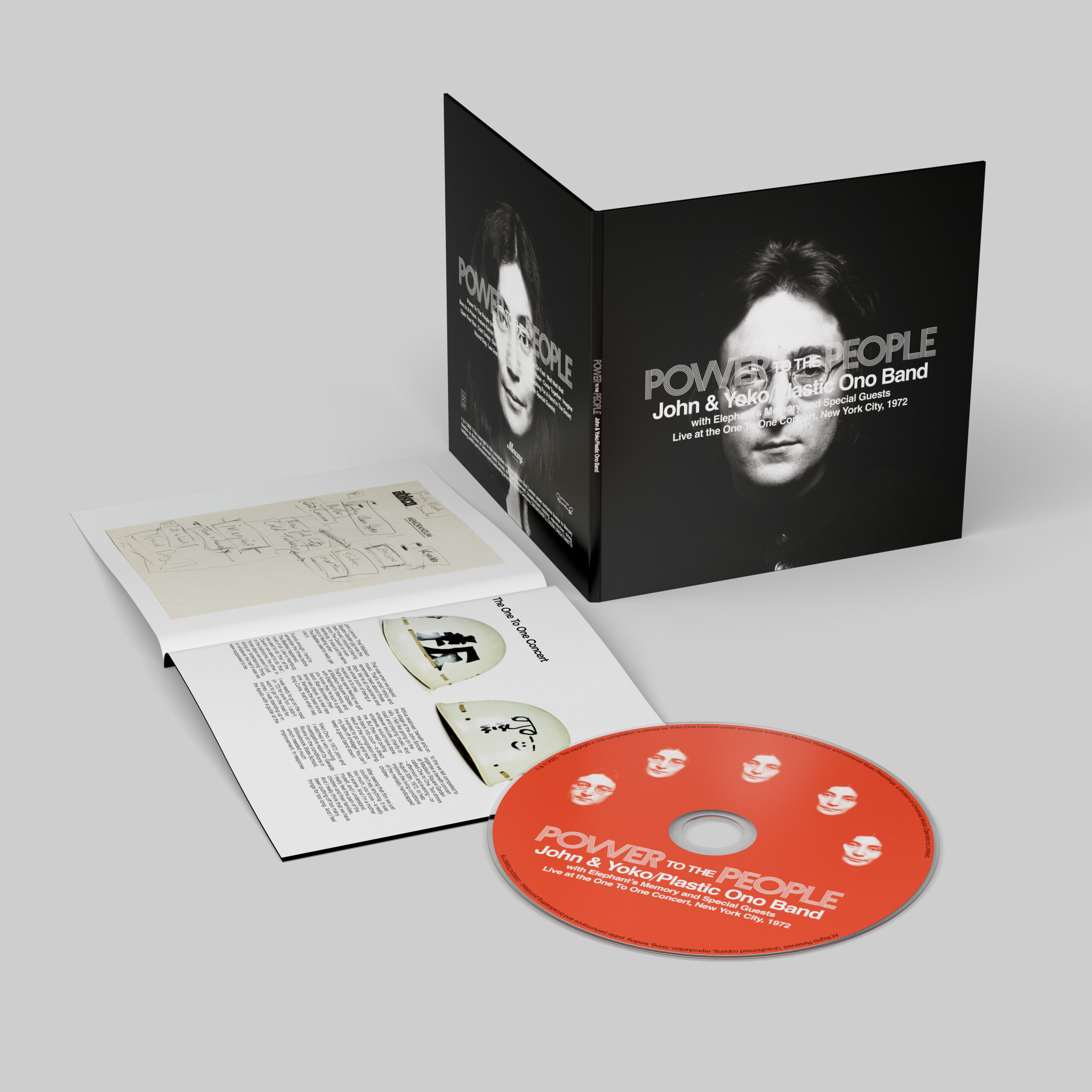
Power To The People
That Madison Square Garden gig was the best music I enjoyed playing since The Cavern or even Hamburg. It was just the same kind of feeling when The Beatles used to really get into it.
– John Lennon
John & Yoko/Plastic Ono Band with Elephants Memory plus special guests
Produced by John & Yoko and Phil Spector
Track Listing
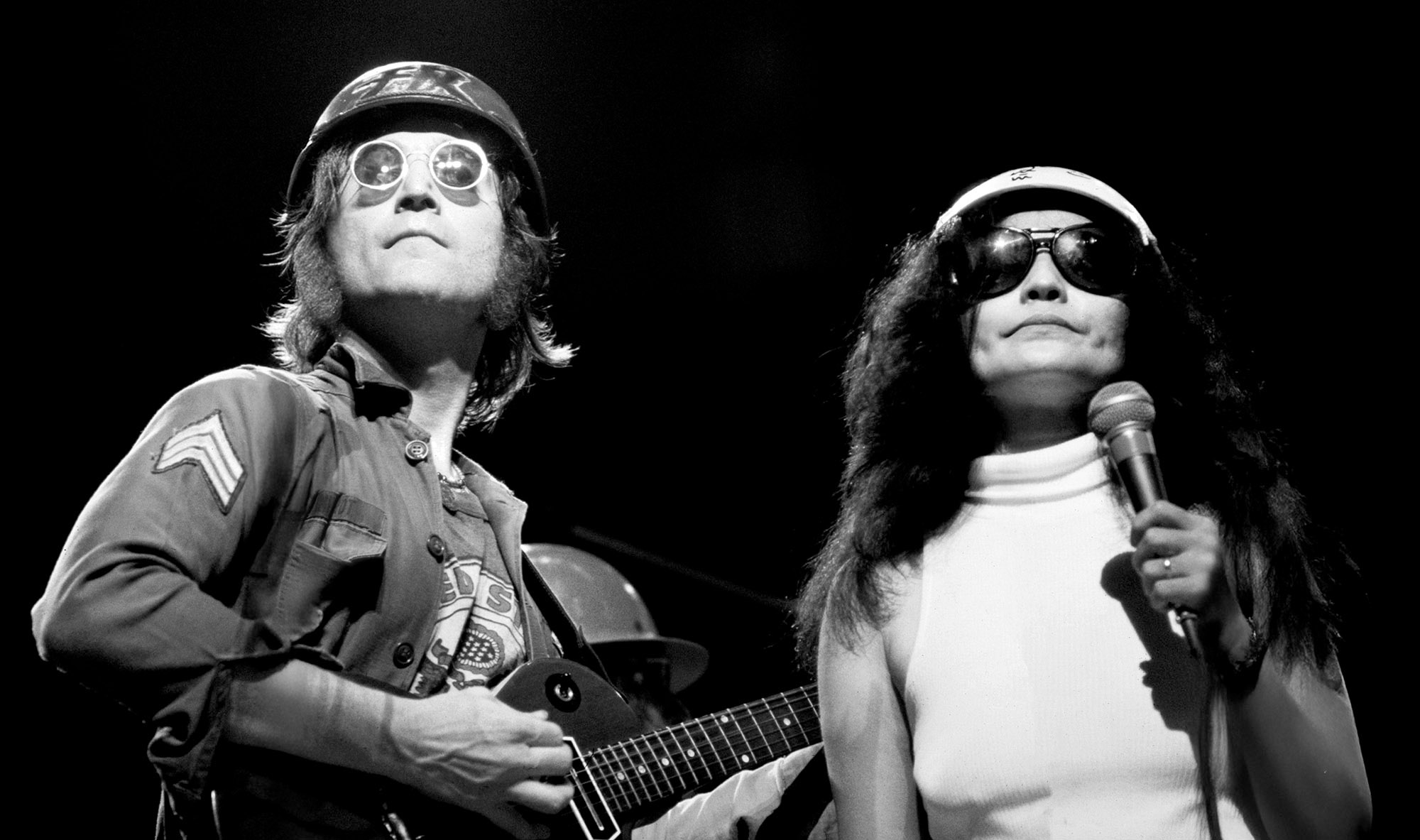
John: Funnily enough, I tend to remember the times before The Beatles happened, most of all. Like in Hamburg we used to do ‘this’; at the Cavern we used to do ‘that’; in the ballrooms, the other. In those days we weren’t just doing an ‘entertaining’ thing, or whatever the hell it was we were supposed to be. That was when we played music. That’s what I enjoy and remember best about those days. We’re all musicians and the whole point of being a musician is to play.
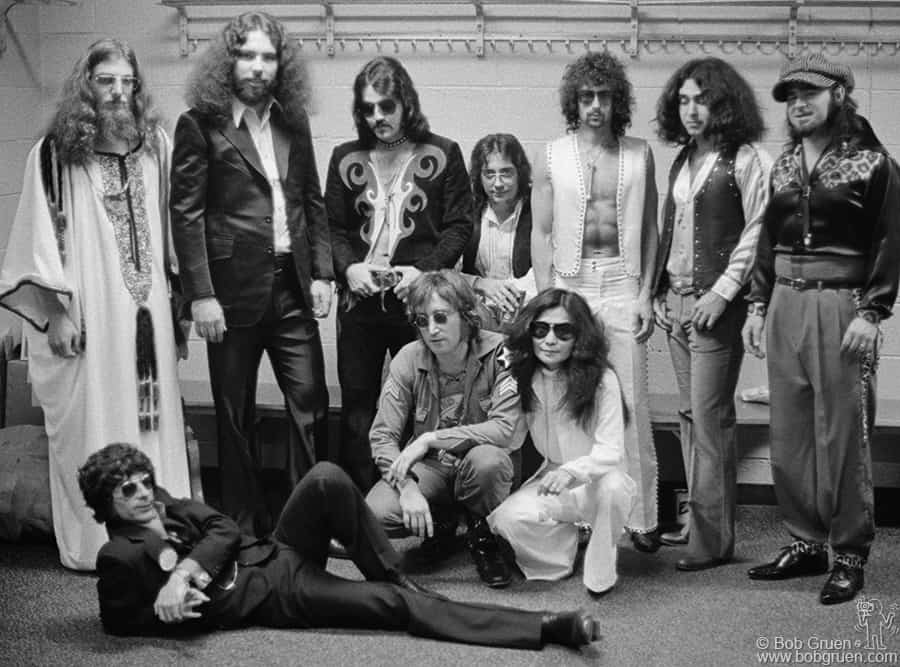
(L-R) top row: John Ward, Gary Van Scyoc, Wayne "Tex" Gabriel, Jim Keltner, Rick Frank, Adam Ippolito and Stan Bronstein of Elephants Memory.
Bottom row: Phil Spector, John Lennon and Yoko Ono. Photo © Bob Gruen / www.bobgruen.com
John: That’s the same feeling we got at Madison Square Garden with Elephant’s Memory, and you know they’re such a good band. Stan Bronstein their tenor sax player, is a real rare one. Perhaps the best since King Curtis, that’s what I say.
I was ready to go on the road (in ’72) for pure fun. I didn’t want to go on the road for money. I was standing up in the Apollo with a guitar at the Attica relatives’ benefit and on the stage at the John Sinclair rally. I felt like going on the road and playing music. And whatever excuse, charity or whatever, would have done me. But they kept pulling me back into court – a direct result of the immigration thing. I wanted to go out and rock my balls off onstage! You can’t keep a good band down!
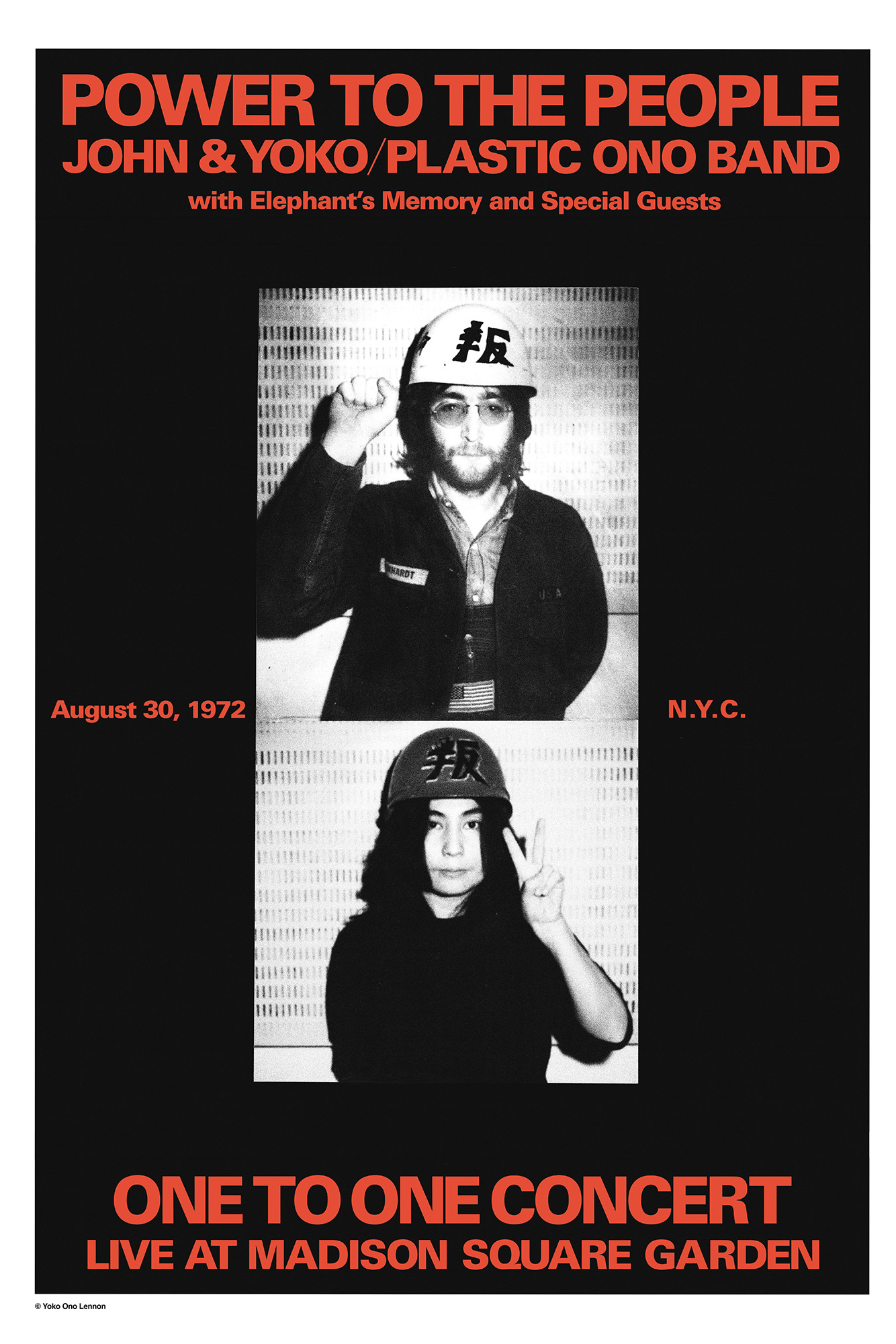
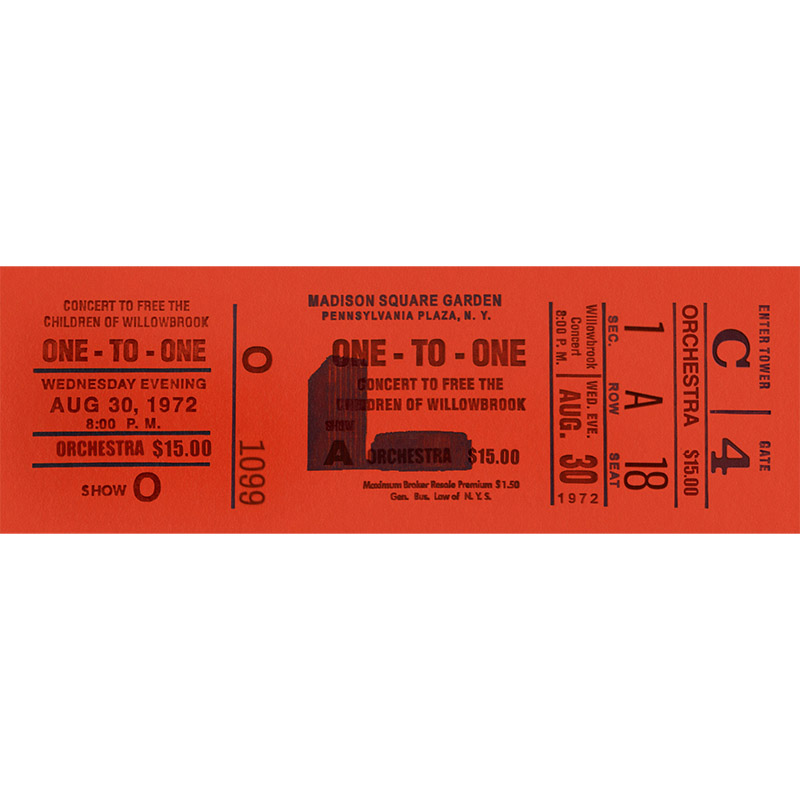
Yoko: In 1972 John and I watched a very moving investigative report by Geraldo Rivera on the conditions in Willowbrook State School, which needed much improvement. In response to this we felt compelled to organise a benefit concert at Madison Square Garden called One to One. Two shows – afternoon and evening – on August 30th, 1972, to help improve the living conditions of the mentally handicapped children.
After seeing that film we just couldn’t say anything. It was too much, you know – a really sad scene. And I’m a mother myself, and I understand. I really feel the pain of the children and their families. And I really think that we have been putting off too many things for too long. And I feel that if we want to change something, if we really want it, we can change. We all shared that pain, you know, so we had to do something about it.
John was always saying, ‘Listen, I’m not going to be a performing flea after thirty. I’m not going to be standing on the stage singing “I Wanna Hold Your Hand”’. But he was, after thirty, still doing it, except this time it was for a good cause, so he felt that he should do it.

John: It’s important. And if we can help them in any way, well, it’s a start, you know? And we want to join in there. I was still riding high on ‘Imagine’ so I was OK for material. But when I did ‘Come Together’ the house came down, which gave me an indication of what people wanted to hear.
These left-wing people talk about giving the power to the people. That’s nonsense – the people have the power. All we’re trying to do is make people aware that they have the power themselves, and the violent way of revolution doesn’t justify the ends.
Our theme is that people have the power to stop things they don’t like. And wars must be the first thing.
And all this crap about the people being given the power by a group of revolutionaries is rubbish. The people have the power now and if we can’t remember it ourselves, how can we expect all the other people to remember it – and if we’re the ones that are doing most shouting about it!

Yoko: Starting with the Toronto Peace Festival in 1969, John and I did a series of rock concerts as our statement of Peace and Love, and to spotlight various social issues effectively. We never accepted any money from the concerts. All the proceeds from the concerts were given to the needy.
In ’72 the Vietnam War protest was at its height. The Feminist Movement was in a stage of awakening. Our concert material was mainly based on the album we released that spring called Some Time In New York City which was our political statement in songs à-la Bertold Brecht.
By the time we did Madison Square Garden, they were really trying to pressure us, so in hindsight, why did we think of doing it at Madison Square Garden? I think it was very, very much like us.
Yoko: Love.
John knew the power of love.
And he also hated injustice and hypocrisy.
For John, it was always important that he reached out his hands to help the people in need and shared the information he got with the world: the truth. There was not one human issue he was not caring about. He spoke freely of what the Blue Meanies were doing to us and the world. That had its price. He was attacked at every turn. But he still went on being amazingly and dangerously truthful. He was obsessed about saying what he wanted to say. His delivery was succinct and powerful.
‘Gimme Some Truth’. That was him.
The concert was filled with love of brotherhood and sisterhood. We passed out tambourines to the audience, true to our slogan ‘You are the Plastic Ono Band’. Everybody joined in onstage at the end when we sang ‘Give Peace A Chance’. People could not contain themselves and marched down Fifth Avenue after the performance, singing ‘Give Peace A Chance’.
We went to the backstage, the car’s there, we got in the car and we were just hugging each other – ‘We did it! We did it!’, you know? (laughs) It was great, you know?
This concert was our effort in Grassroots Politics. It embodied what John and I strongly believed in – Rock for Peace and Enlightenment. And this one in Madison Square Garden turned out to be the last concert John and I did together.
Power To The People!

Remixing The One To One Concert ⋆ Sean Ono Lennon
Sean Ono Lennon: Mixing the concert recordings was really fun, mainly because there was a lot of work to do. For whatever reason the technical side of the One To One Concerts seemed a bit haphazard and disorganized.
Between the matinée and evening shows, there were microphone changes and stage layout changes that seemed to be last minute decisions. This all made for some compromised recordings in terms of leaks and lack of coverage. So it was a lot of work. But that makes it more rewarding from my perspective. It gave us a chance to really put our heads together and find solutions.
Paul Hicks and Simon Hilton and I spent a lot of time finding the best possible balance to keep the feeling of a live show while refining the overall sound as much as possible and Sam Gannon did some meticulous and miraculous work with audio restoration. I won’t disclose all our techniques but there was some ‘movie magic’ required, and I think in the end, the shows sound better than ever.
My father singing ‘Mother’ is my personal highlight from the show. Watching and hearing it may require some tissues and possibly a blanket and/or a bottle of whiskey.
I was completely floored. Maybe not everyone realises how special it is for me to hear my dad talking or to see him. I grew up with a set number of images and audio clips that everyone’s familiar with. So to come across things that I’ve never seen or heard is really deep for me, because it’s almost like getting more time with my dad.
I never played music because I was good at it. I lost my father and I didn’t know how to fill that void. I became a musician because I missed him.
Learning how to play his songs on guitar was a way to process the loss with an activity that made me feel connected to him.
When you’ve lost a parent, things like that motivate you — because you’re trying to find them. Making music always made me feel like I was getting to know him better. I associated music with my dad, so playing music made me feel like I was connected to him. I became preoccupied with playing piano and learning guitar because there was this empty space where my dad was supposed to be.
When I was eleven, my mum put out the John Lennon Live in New York City album and film. So I grew up listening to it. It was a concert that had a legendary status in my mind, because it was my dad’s last concert. I remember wanting a Les Paul because he played Les Paul during that show. I remember noticing that he made a mistake on one of the notes on the Wurlitzer during the song ‘Mother’ and thinking, ‘Wow, I guess it’s OK to make mistakes on stage.’
My early childhood was very chaotic. It was a very strange time. It felt like it was on the heels of this chaos that they had been going through in the early ‘70s. There were characters hanging around and things that happened that were sort of the echoes of that time when they were being harassed and monitored. There was this FBI agent named Doug MacDougall who came to ‘protect’ my mum and me, after dad died. Later, we wound up finding out that he been stealing things from us – my dad’s glasses, some guitars, things like that. And it turned out that he was a bad guy. In fact, he had been working for Nixon to deport John & Yoko. It was really creepy.
Dad’s amazing at that show, specifically his voice. It’s got grit to it. Let’s just say, if I was in a band with John Lennon, I wouldn’t solo over his voice when he’s singing. [laughs] Let’s just put it that way.
I feel very grateful I got to work on it because he did plan on touring and he didn’t get to, so all we’ve got is this concert. And I think it is very beautiful because it is so unlike what people were doing at the time. Everybody was getting into slicker and slicker stuff in the early ‘70s, and I think my dad was already kind of pre-empting the arrival of punk. He just wanted to go back to basics and be raw and spontaneous and rock ‘n’ roll. It’s a very cool thing he was doing that was very against the grain.
They were very brave, John & Yoko, to go from singing songs to hanging out with the Chicago Seven, hanging out with the Black Panthers, and becoming real radical activists. But you see that it goes too far. And you can feel that my dad is scared. I think a lot of people today remember my dad’s activism as aligning with Jerry Rubin’s. But he moves beyond that when he realizes that they’re violent too, or they want to be violent. And it’s a cold splash of water in the face.
They were the first power couple, like Brangelina. He wanted them to be an institution beyond just marriage and family. He wanted them to be an artistic union, a political union, a romantic union. They filmed themselves all the time, invented little catchphrases like ‘Give Peace A Chance’ and ‘Bed Peace’ to spread arguably subversive political messaging.
John & Yoko were some of the first celebrities to use memes, before they were called memes.
My parents were always very conscious of spreading messages of positive change and peace and love. You lose the moral high ground when you become violent yourself. You see my parents realizing that some of the people who were supposed to be fighting for justice were turning into monsters themselves. As soon as you try to make your point through violence, you’ve lost the argument.
I’ve spent most of my life trying to avoid speaking for him. But I do believe that one thing that was consistent about my dad intellectually and artistically, he was never the same from one year to the next. His mind was always evolving, he was always discovering new ideas and inspiration.
Whatever you think John Lennon would think today is probably not it. He was always changing his mind. He would probably surprise you because he always surprised everybody.
I don’t think my parents ever imagined that we’d still be entrenched in multiple foreign wars, it’s really sad. I definitely ascribe to this idea that we’ll never reach the stars or populate another solar system if we can’t get past killing each other.
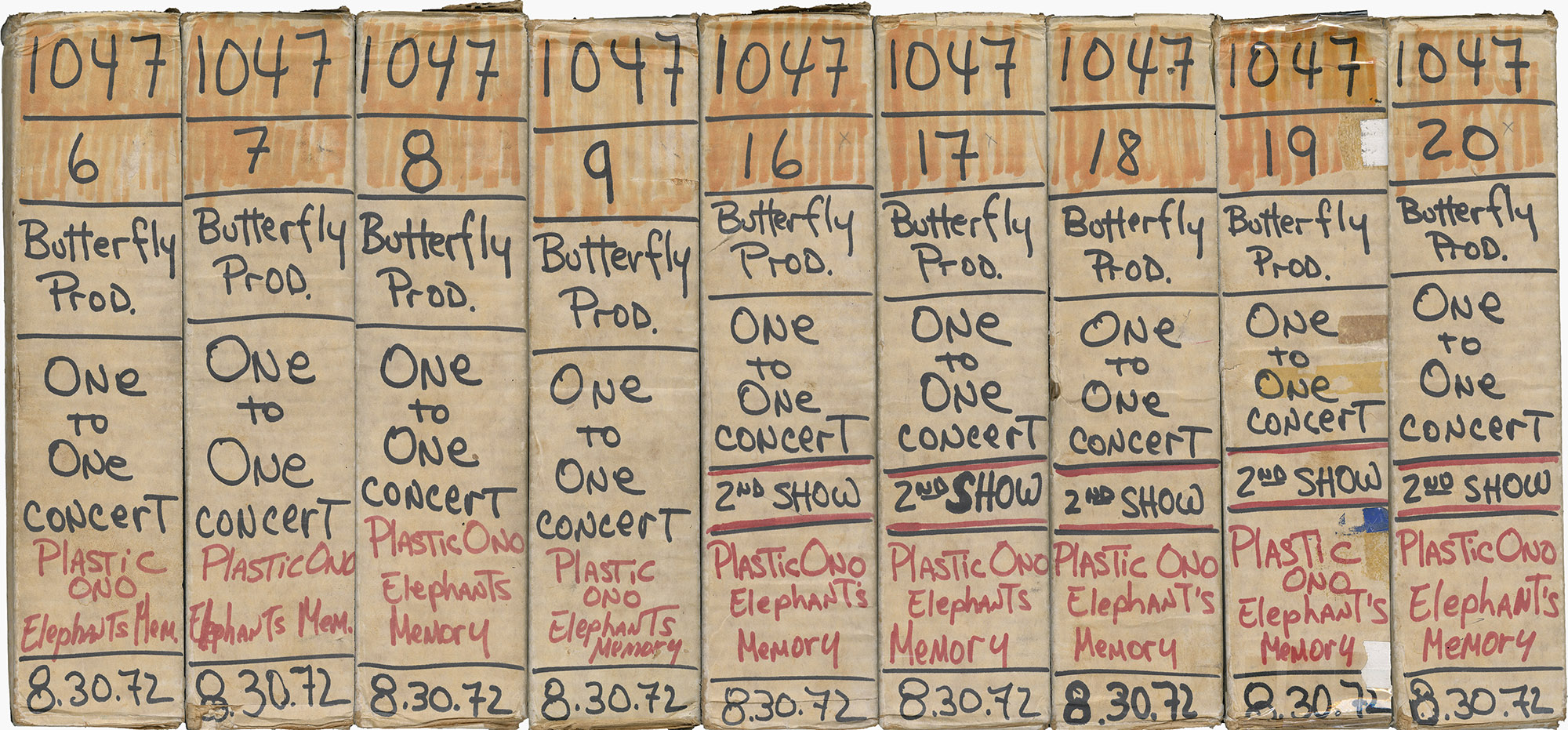
The One To One Concerts
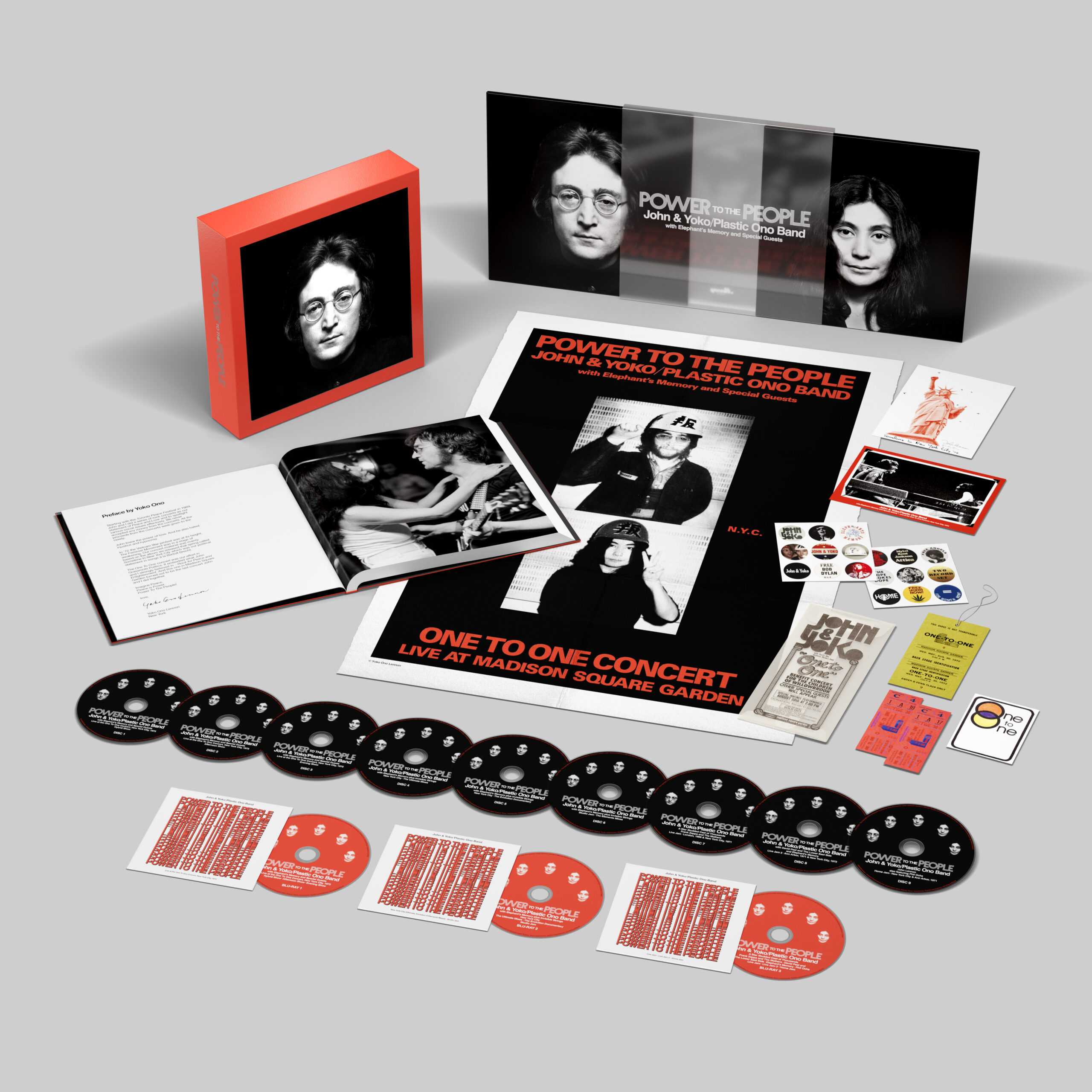
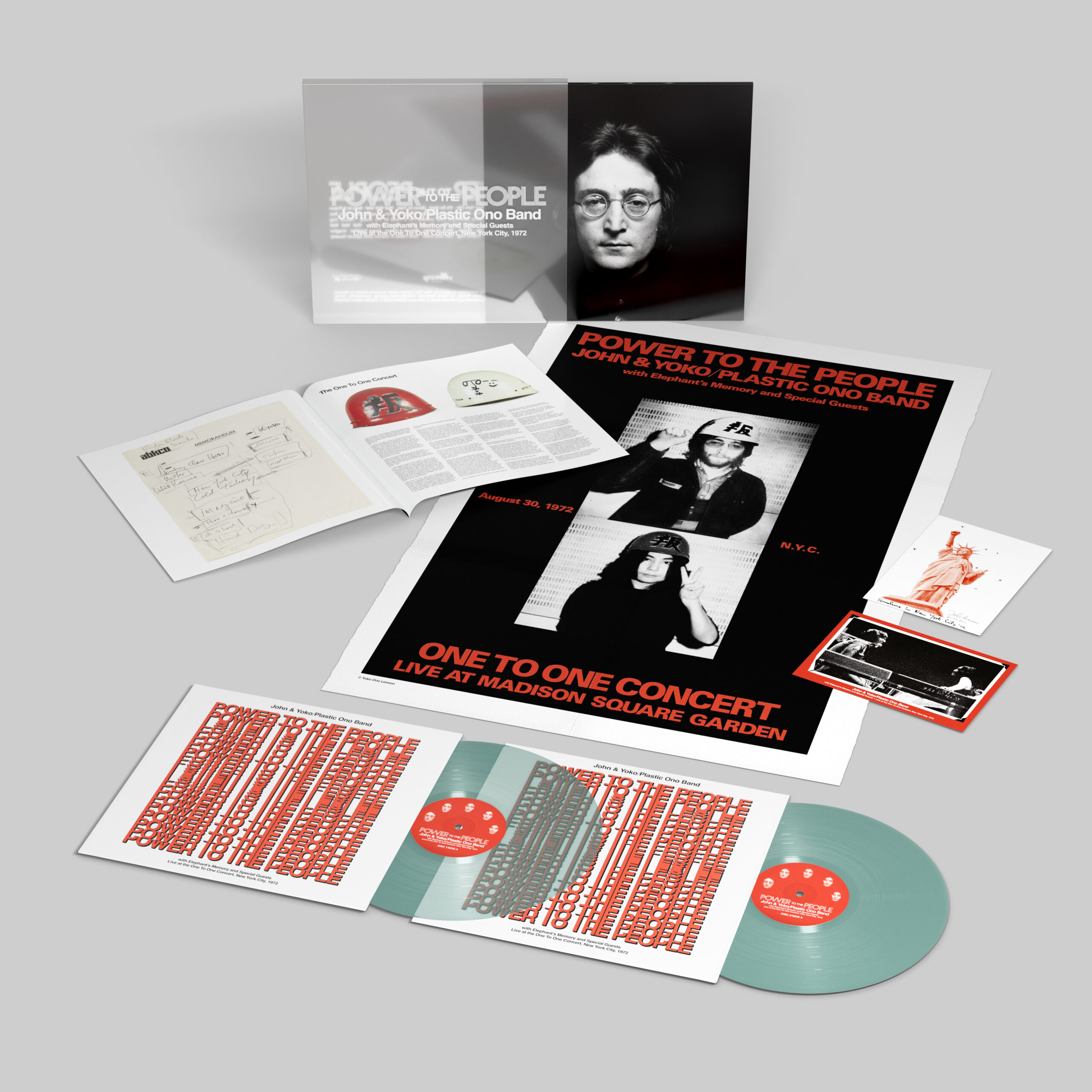
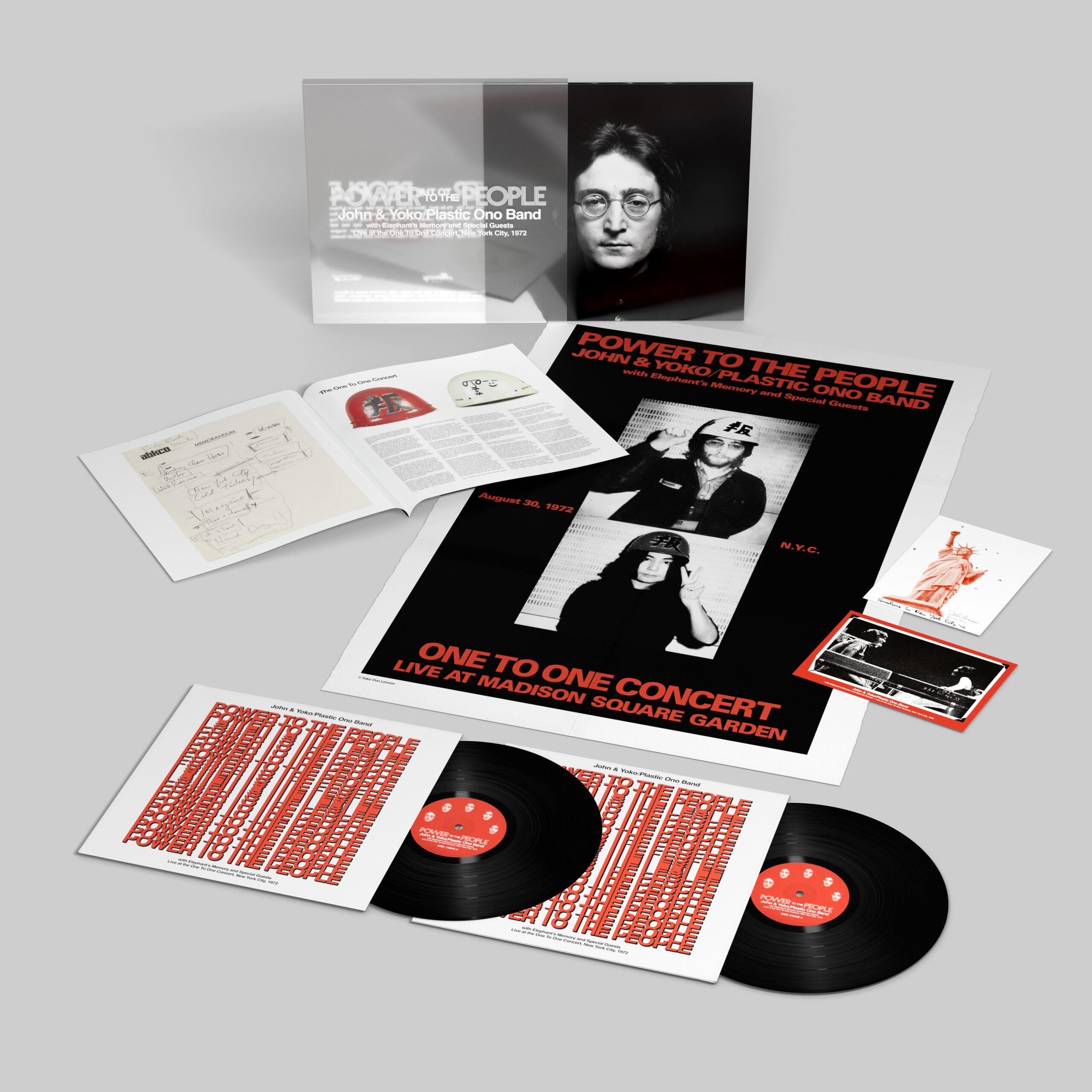
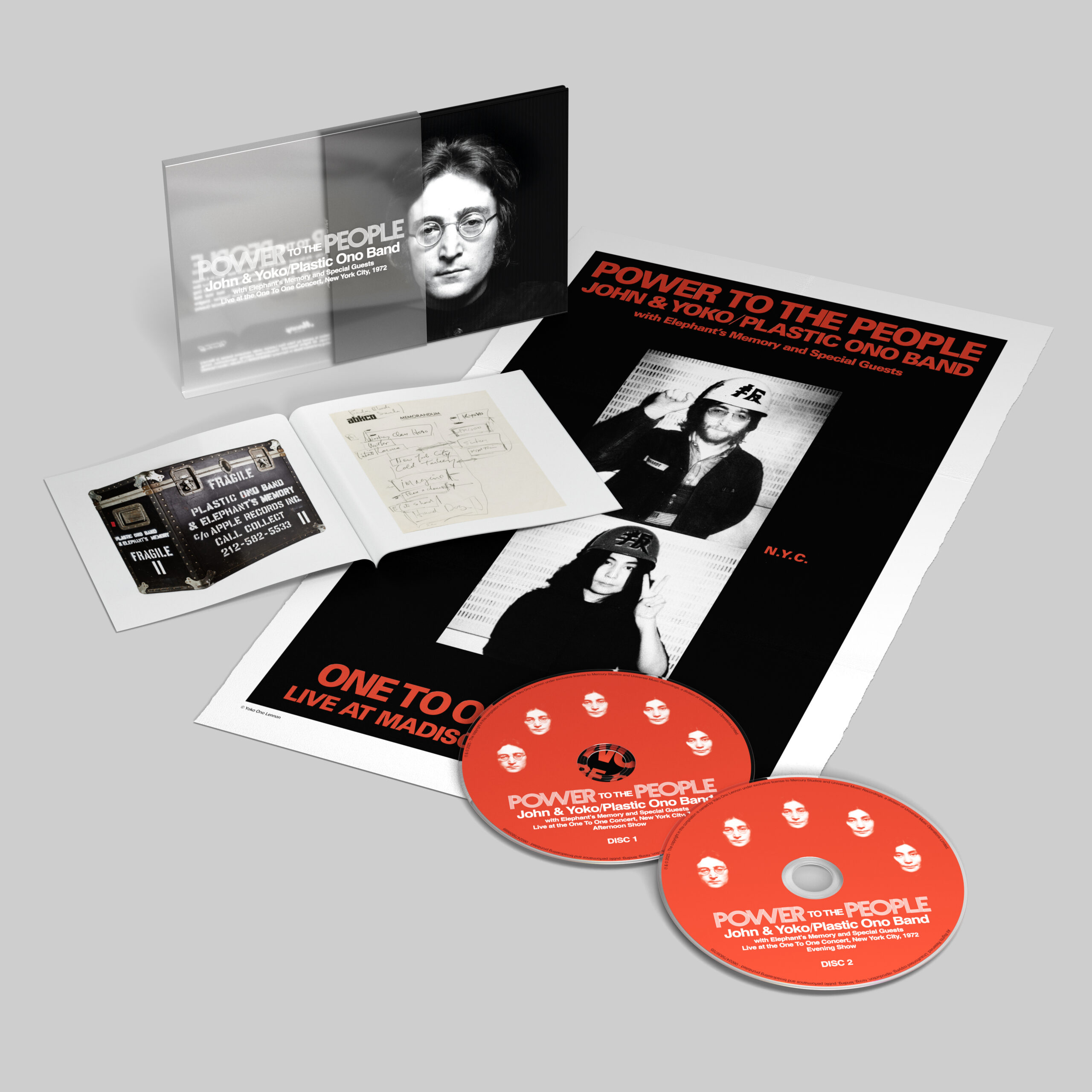
The centerpiece of POWER TO THE PEOPLE is the One To One Concerts, with the afternoon and evening performances released together for the first time.
The concerts raised more than $1.5 million (2025 equivalent of $11.5 million) to support children with intellectual and developmental disabilities.
Produced by Sean Ono Lennon, all the tracks have been completely remixed and re-engineered from the original multitrack analog tapes by Paul Hicks and Sam Gannon, using brand new HD transfers by Rob Stevens with the stereo mixes mastered by Alex Wharton at Abbey Road Studios.
The concerts are available separately as both “Afternoon” and “Evening” shows and also as a single “Hybrid” show, which brings together the best performances from both shows.
Previously only old mixes of select performances had been available on the long out-of-print 1986 posthumous live album, Live In New York City.

Wayne "Tex" Gabriel, Jim Keltner and Adam Ippolito of Elephants Memory.
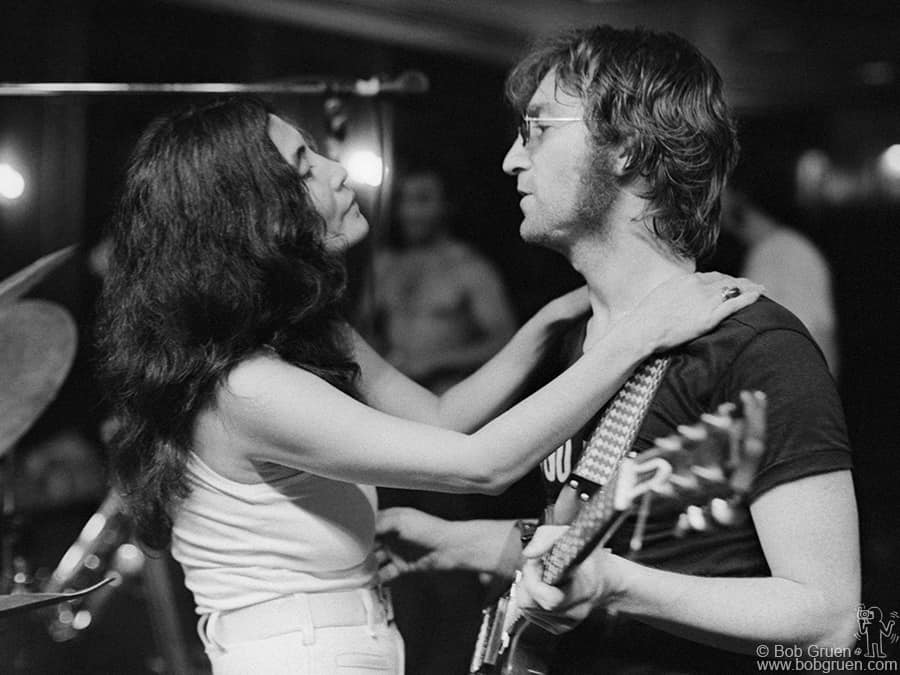
Bottom row: Rick Frank of Elephants Memory, Yoko Ono and John Lennon at The Record Plant, NYC. 1972. Photo by & © Bob Gruen
New York City
Alongside the concerts, Power To The People (Super Deluxe Edition) offers an aural time capsule of John & Yoko’s first NYC era, when they traded Tittenhurst Park, their estate in Ascot, England, for a small apartment located at 105 Bank St. in Greenwich Village in Manhattan, and includes the music they were inspired to make during a time of great civil unrest and the deeply unpopular Vietnam War.
Paramount to their recorded musical endeavors at this time was their 1972 political blockbuster album, Sometime In New York City, recorded by John & Yoko with Jim Keltner and New York’s finest rock ‘n’ roll protest street band, Elephant’s Memory.
For this special collection, songs from the album have been completely remixed from scratch, stripped of the overly heavy production sound that constrained such inspired and inspiring songs as “Attica State,” “Angela,” “New York City,” and “Born In A Prison.”
The tracks have been reordered, rejuvenated and completely reimagined as a new set of Ultimate Mixes, entitled New York City, which also includes extended versions of “John Sinclair” and “Sunday Bloody Sunday.”
The Evolution Documentaries
Each track is explored with an Evolution Documentary, a unique track-by-track audio montage by Sam Gannon that details the evolution of each song from demo to master recording via demos, rehearsals, outtakes, multitrack exploration, and studio conversations.
The Elements Mixes
A series of four Elements Mixes isolates the orchestral arrangements, opening them up and presenting them on a wider and brighter sound stage, to reveal deeper levels of detail and clarity. The hope is that after hearing the exquisite orchestral arrangements on their own new details previously hidden in the songs will be heard in a completely new way.
Studio Jam
Studio Jam features John & Yoko with Jim Keltner and Elephant’s Memory at Record Plant Studios during the Sometime In New York City sessions, where in between recording album takes, they spontaneously jammed 16 classic rock ‘n’ roll cover versions.
Studio Jam gives a tantalizing glimpse into the fun the musicians had as the tape kept rolling between takes and hints at what was in store for John’s classic 1975 album, Rock ‘N’ Roll.
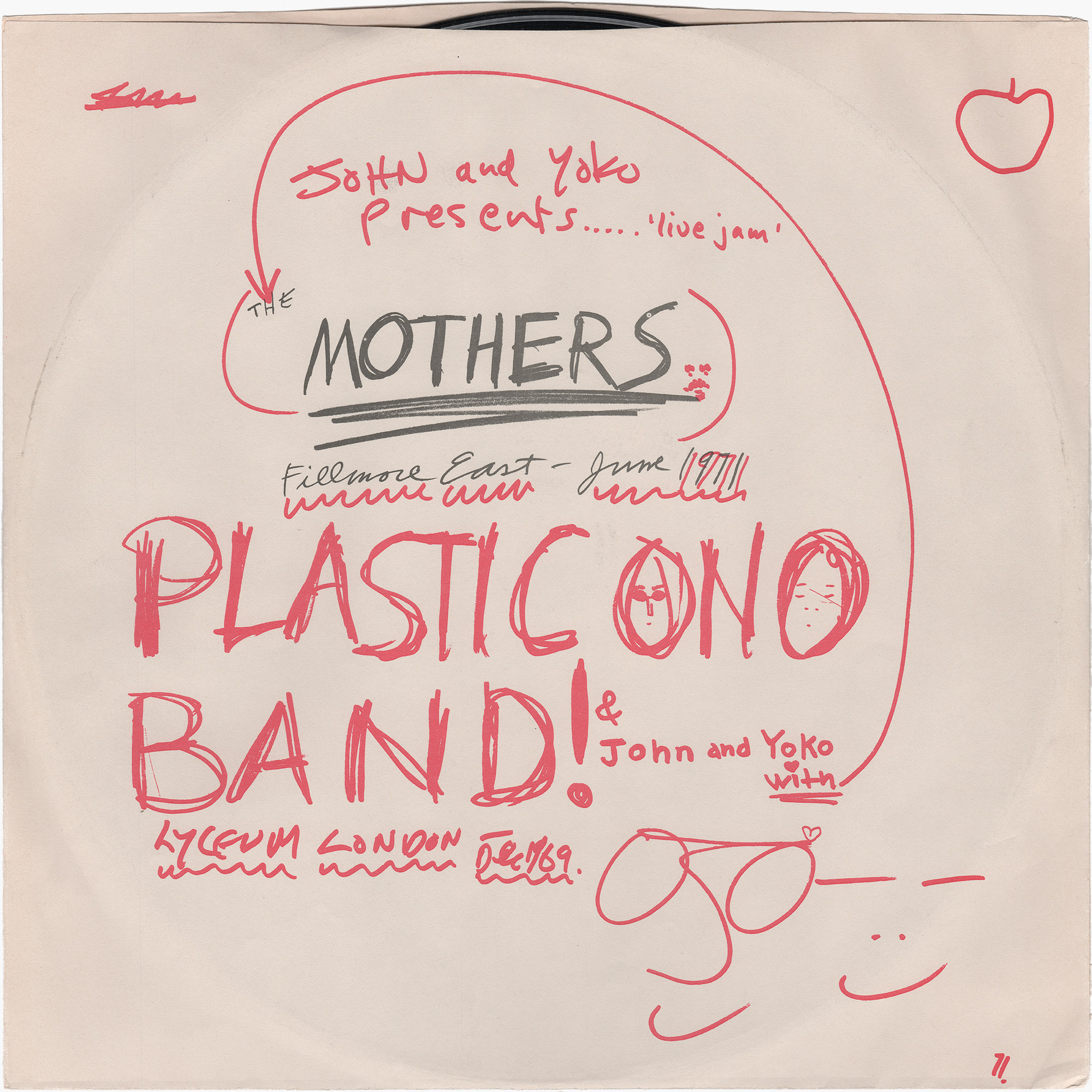
Live Jam
Live Jam comprises two discs of further completely remixed live performances, expanding on the original 1972 Live Jam LP release that accompanied Sometime In New York City, which included performances of “Cold Turkey” and “Don’t Worry Kyoko” from the 1969 Peace and Love for Christmas UNICEF Benefit at The Lyceum Ballroom (with George Harrison, Eric Clapton, Klaus Voormann and a star-studded cast of thousands) and the 1971 Fillmore East show where John & Yoko jammed with Frank Zappa and The Mothers of Invention on four songs.
The Live Jam 2 disc includes John & Yoko/Plastic Ono Band with musician David Peel and The Lower East Side performing a handful of stripped-down songs that would be released the following year on Sometime in New York City, including the first live performance of “Attica State,” along with “The Luck Of The Irish,” “Sisters, O Sisters,” and “John Sinclair,” on December 10, 1971, at the John Sinclair Freedom Rally at Crisler Arena in Ann Arbor, Mich., held in support of the release of political activist John Sinclair who was imprisoned for a 10 year sentence for possession of marijuana.
John & Yoko’s acoustic performance on December 17, 1971 at the Apollo Theatre in Harlem, NYC, at a benefit for the families of victims of the riot at the Attica State Correction Facility includes “Attica State,” the song John & Yoko wrote on John’s birthday (October 10, 1971) a few weeks after the tragedy (September 9-13, 1971), “Sisters, O Sisters” and a poignant performance of “Imagine” on acoustic guitar.
Also included are John & Yoko’s TV performances on The David Frost Show (with Plastic Ono Band) and at the Jerry Lewis Muscular Telethon (with Elephant’s Memory).
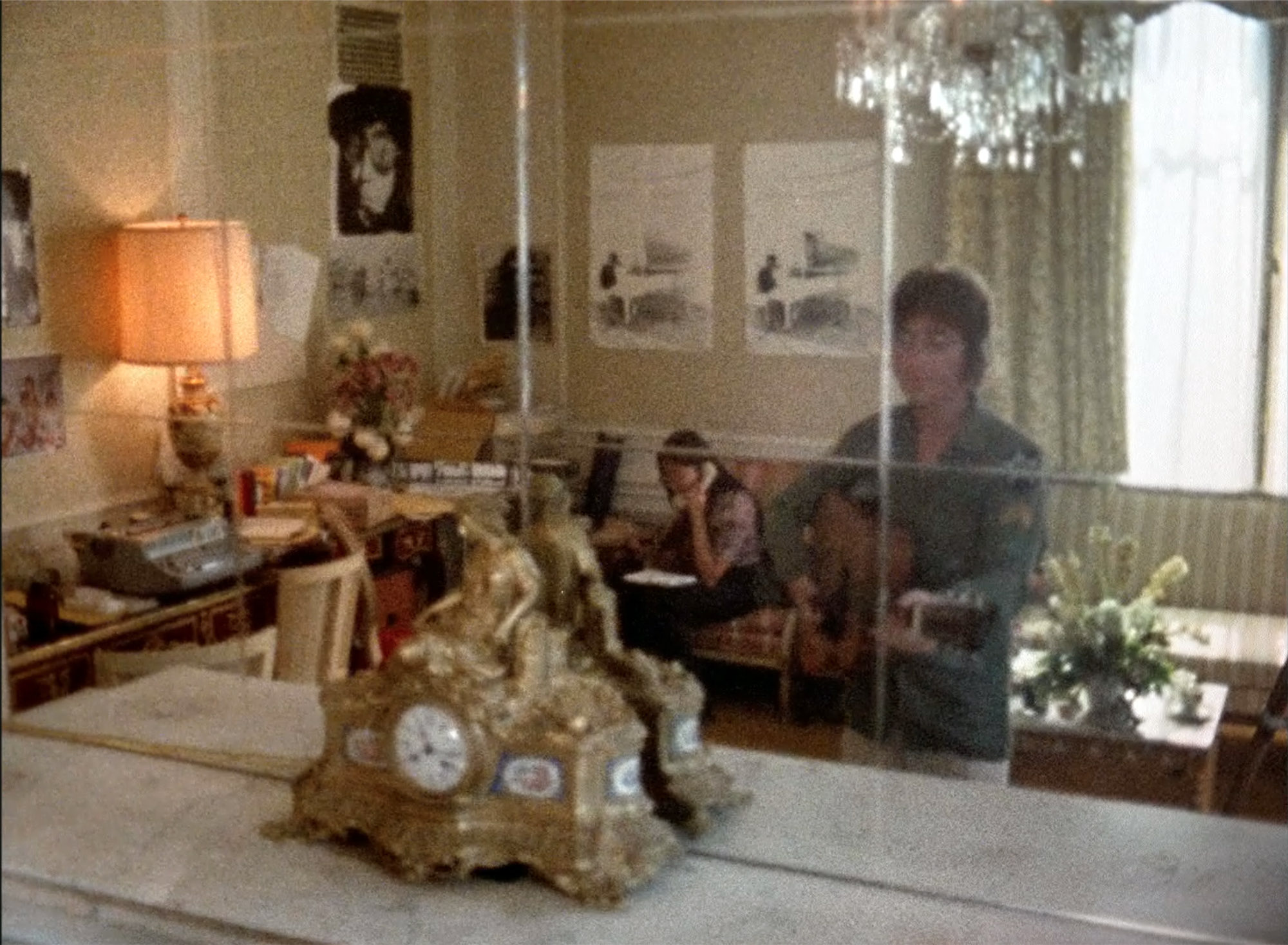
Home Jam
The collection concludes with Home Jam, 33 raw, intimate acoustic demos, covers and home recordings from 1971 from John’s private 1/4-inch tape and cassette collections, recorded at the St. Regis Hotel in NYC and the Campus Inn in Ann Arbor, Michigan; including four tracks with protest singer Phil Ochs.
John’s impromptu covers span songs written or popularized by Buddy Holly, Carl Perkins, Chuck Berry, Duane Eddy, The Dave Clark Five, Elvis Presley, The Everly Brothers, Little Richard, and others.

John & Yoko in New York City
When John Lennon and Yoko Ono arrived in the United States in 1971, they weren’t just escaping the ghosts of the Beatles or the British press, they were seeking a fresh start in a country teetering on the edge of political and cultural transformation. But what awaited them was not just the artistic freedom they craved, but years of surveillance, government harassment, and personal anguish that would shape their early American experience.
They settled at 105 Bank St. in New York City’s Greenwich Village, drawn to the city’s raw energy and progressive undercurrent. Almost immediately, John & Yoko immersed themselves in radical politics and avant-garde art. They aligned with activists, performed at protests, and used their platform to amplify causes like feminism, anti-war resistance, and prison reform.
The couple’s outspoken views and growing ties to the counterculture quickly caught the attention of the Nixon administration. Alarmed by John’s potential influence on young voters, particularly with the 1972 election looming, President Richard Nixon and FBI Director J. Edgar Hoover made John a target. The FBI began extensive surveillance, tapping phones, tailing the couple, and compiling hundreds of pages of intelligence files. The government also launched a campaign to deport John, citing a minor 1968 marijuana conviction in the UK as a pretext.
At the same time, Yoko was fighting her own personal battle: to locate and regain custody of her daughter, Kyoko, who had been abducted by her ex-husband, Anthony Cox and disappeared. Unbeknownst to Yoko, he had hidden himself and their child behind the walls of a religious cult in Idaho. Her grief over Kyoko’s absence haunted both her art and private life.
Amid all this turmoil, John & Yoko continued to perform and create. Their 1972 album Sometime in New York City reflected their politics and passions, addressing everything from racial injustice, the Attica Prison riots, civil rights activists like Angela Davis, to women’s liberation, using blunt lyrics and sharp wit to confront inequality and oppression.
John & Yoko share lead vocals throughout, with Yoko contributing a number of her own politically charged tracks such as “We’re All Water” and “Sisters, O Sisters.”
Designed to resemble a newspaper, the record’s cover mimicked the New York Times, complete with headlines, columns, and photos that reflect the themes addressed in the songs, underscoring its mission to inform, provoke, and spark dialogue.
The album was recorded primarily at New York’s Record Plant Studios with backing by Elephant’s Memory, a hard-edged local band known for their activism and gritty sound. The group, consisting of Adam Ippolito (keyboards), Gary Van Scyoc (bass), Richard Frank Jr. (drums), Wayne “Tex” Gabriel (guitar), Stan Bronstein (saxophone), plus drummer Jim Keltner, provided a muscular, streetwise foundation for the record’s mix of rock, soul, and protest music. Phil Spector co-produced the album alongside John & Yoko, continuing a collaboration that began with Imagine.
On August 30, 1972, John Lennon and Yoko Ono/Plastic Ono Band, backed by Elephant’s Memory, and joined by special guests, headlined two historic One to One Benefit Concerts at Madison Square Garden in New York City. These performances included an afternoon matinee and an evening performance, held to a combined audience of 40,000 people, raising more than $1.5 million (today’s equivalent of $11.5 million) to support children with with intellectual and developmental disabilities, including children from the Willowbrook State School in Staten Island, N.Y.
John & Yoko became aware of Willowbrook, a state-supported institution for physically and mentally handicapped children, after seeing an investigative report from Geraldo Rivera that exposed the horrible conditions and questionable medical practices the children endured. The electrifying concert featured songs from across John and Yoko’s solo albums, songs from their just-released album, Sometime In New York City, a Beatles cut and and peace anthems like “Imagine” and “Give Peace A Chance.” It also included an appearance from Stevie Wonder. These were John Lennon’s only full-length concerts after leaving The Beatles.
The pressure mounted in late 1972 as legal battles over John’s immigration status dragged on. For several years, the threat of deportation loomed large. With the help of attorney Leon Wildes, John challenged the government’s case, and by 1975, just as the Watergate scandal brought down Nixon, the tide turned. John was finally granted permanent U.S. residency in 1976.
The early 1970s were a defining period for John & Yoko – a time of political activism, intense scrutiny, legal struggle, and profound personal pain. But through it all, they remained united in their mission to challenge the system, express themselves freely, and, above all, imagine a better world. Power To The People stunningly documents this vital era in John & Yoko’s musical and personal lives.